
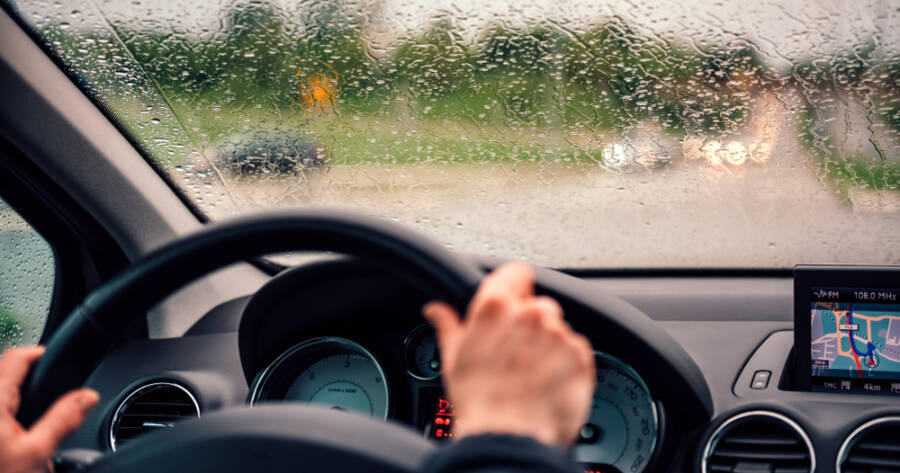
Heavy rain changes the road faster than most drivers expect. Water reduces traction, blurs lane markings, and turns routine stops into longer, slippery guesses, especially when visibility drops and puddles start pooling in wheel tracks. The goal isn’t to “push through” the storm; it’s to stay calm, stay predictable, and give both your tires and your brain more time to react. A few smart adjustments can lower the odds of hydroplaning, rear-end collisions, and last-second swerves.
Slow Down to Match the Grip You Have
Speed is the biggest factor you control in heavy rain. Wet pavement offers less traction, which means your tires need more time and distance to slow down, turn, or recover from a mistake. Even light standing water can reduce tire contact with the road and increase the risk of hydroplaning, so a pace that felt normal five minutes ago may suddenly be too fast.
Smoothness matters as much as speed. Accelerate gently, brake earlier than usual, and take turns with less steering input. If you need to slow down, ease off the accelerator first and let the car settle before braking. The calmer your inputs, the more grip your tires can devote to keeping you pointed where you want to go.
Leave Extra Following Distance and Plan Stops Early
Heavy rain turns “normal” following distances into a gamble because stopping distances grow quickly on wet roads. Adding space creates a buffer for sudden brake lights, spray that hides hazards, and the extra time your tires need to shed water. Aim for a longer gap than you’d use on dry pavement, and increase it further if visibility is poor or traffic is moving in unpredictable bursts.
Think ahead at intersections and highway merges. Start easing off the gas early so you’re not forced into hard braking at the last second. When traffic slows, try to brake in a straight line before turning rather than mixing heavy braking and steering at the same time. One action at a time—brake, then turn, then accelerate—helps keep the vehicle stable.
Use Headlights and Defog for Maximum Visibility
In a downpour, visibility is a two-way problem: you must see clearly, and other drivers must see you. Turn on your headlights (even during the day) so your vehicle is easier to spot through spray and gray skies. Avoid relying on daytime running lights alone, since they may not activate your taillights on some vehicles, leaving you harder to see from behind.
Keep the windshield clear from the inside, too. If windows start fogging, use the defroster and adjust the temperature and fan speed until the glass stays clear. Air conditioning can help remove moisture from cabin air, even in cooler weather. A clear windshield and visible taillights reduce sudden surprises, which is where many rain-related crashes begin.
Skip Cruise Control and Stay Fully Engaged
Cruise control can feel helpful on long drives, but in wet conditions, it can work against you. When traction drops, the safest response is often to ease off the accelerator immediately. Cruise control keeps applying throttle to maintain speed, which can make a loss of grip worse before you even realize what’s happening.
Heavy rain also demands constant micro-adjustments: speed changes for pooling water, light braking for traffic ripples, and quick decisions when visibility suddenly collapses behind a truck’s spray. Driving manually keeps you connected to the road and ready to respond. If the storm is intense, treat the drive like a high-attention task, not a set-it-and-forget-it situation.
Avoid Standing Water, Flooded Roads, and Hidden Hazards
Puddles aren’t just annoying—they’re unknowns. Water can hide potholes, debris, and uneven pavement, and deeper pooling raises the chance of hydroplaning. When possible, steer around large puddles and avoid the deepest wheel tracks where water collects. If you must drive through shallow water, reduce speed well before reaching it and hold a steady line without sudden braking.
Never assume a flooded road is safe. Water depth is hard to judge from the driver’s seat, and moving water can be powerful enough to sweep a vehicle off course. If you can’t clearly see the road surface, choose a different route. Watch for debris as well. Branches, litter, and objects blown into lanes can appear with little warning in stormy conditions.
Know What to Do If You Hydroplane or Start Skidding
Hydroplaning happens when tires ride up on a thin film of water and lose traction. It can feel like the steering goes light or the car is suddenly floating. The key is to stay calm and avoid abrupt moves. Ease off the accelerator to let the tires slow and regain contact, and keep your eyes focused where you want the car to go.
Avoid slamming on the brakes, which can worsen a skid by upsetting the car’s balance. Steer smoothly in the direction you want to travel and wait for grip to return. Once you feel the tires “bite” again, continue at a lower speed and treat that moment as a warning that conditions are worse than they look. If hydroplaning happens more than once, it’s a strong sign to slow further or pull off safely.
Make Safety the Plan, Not the Backup
Sometimes the safest decision is to pause the drive. If visibility drops to a point where lane markings disappear, vehicles ahead are hard to see, or you feel tense trying to keep the car settled, find a safe place to pull over (well off the roadway) and wait out the worst of the storm. Hazard lights can help others spot you if you’re stopped, but avoid stopping on the shoulder if it’s not safe or if spray from passing cars creates a secondary hazard.
After the rain, give your car a quick reality check. Wipers that smear, tires that feel vague, or brakes that respond oddly are signs that something needs attention. Refilling washer fluid, replacing worn blades, and keeping tires properly inflated all pay off the next time the sky opens up because clear vision and solid traction are the foundation of safe wet-weather driving.