
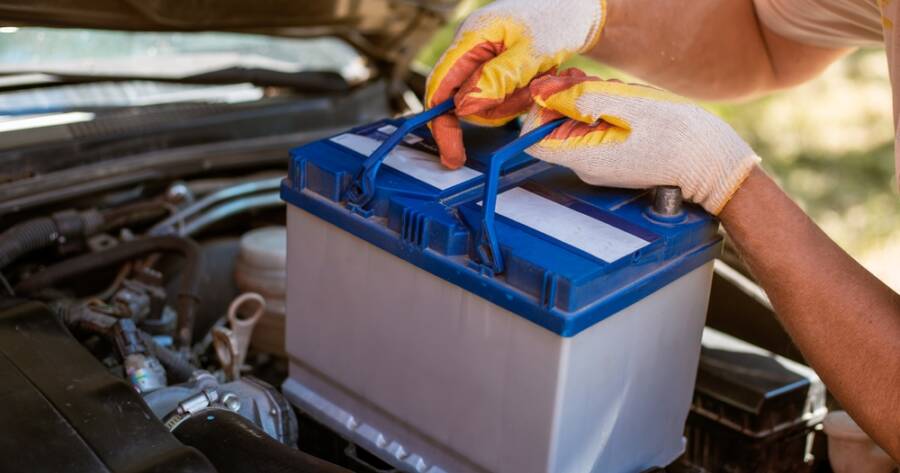
A healthy car battery quietly powers everything from the starter motor to headlights and onboard electronics. Most drivers rarely think about it until the vehicle refuses to start on a busy morning. Fortunately, batteries often give warning signs before completely failing. Recognizing subtle changes in how a car starts or how electrical systems behave can provide valuable time to schedule a replacement and avoid the frustration of being stranded.
Slow Engine Cranking When Starting
One of the most common early signs of a weakening battery is a slow engine crank. When the ignition key is turned or the start button is pressed, the starter motor relies on battery power to spin the engine. A strong battery turns the engine over quickly and smoothly.
As a battery ages, it loses its ability to deliver strong bursts of electricity. That decline often causes the engine to crank more slowly than usual. Drivers who notice the engine struggling to start or sounding sluggish during ignition should pay attention. A slow crank often appears weeks or months before a battery completely fails, making it a valuable early warning sign.
Dim Headlights and Weak Electrical Power
Electrical components in a vehicle depend heavily on battery power, especially when the engine is off or idling. When a battery begins to weaken, it may struggle to provide enough electricity for all systems. Headlights may appear dimmer than normal, particularly when the vehicle is stopped at a traffic light.
Other electrical features may also show reduced performance. Power windows might move more slowly, dashboard displays may flicker, or the radio could momentarily lose power during startup. Such symptoms often suggest the battery is no longer able to maintain consistent electrical output. Addressing the issue early helps prevent sudden electrical failures while driving.
Clicking Sounds When Turning the Key
A clicking sound when attempting to start the engine is another well-known indicator of battery trouble. The sound often comes from the starter solenoid, which relies on electrical current from the battery to activate the starter motor. When the battery cannot supply enough power, the starter may repeatedly click without turning the engine.
That clicking noise typically means the battery’s charge is extremely low or its internal components are failing. Occasionally, loose battery cables or corroded terminals can produce similar symptoms. However, if the clicking occurs frequently, the battery itself is often the root cause. Testing the battery’s charge can quickly confirm whether replacement is necessary.
Frequent Need for Jump-Starts
Needing a jump-start once may simply mean a light was left on overnight. Requiring jump-starts regularly, however, usually points to a deeper problem. Car batteries are designed to hold a charge and restart the vehicle repeatedly without assistance.
When a battery begins to fail, its ability to store energy declines. As a result, it may lose charge quickly after sitting for a short time. Jump-starting may temporarily revive the vehicle, but the underlying weakness remains. If a battery repeatedly requires external power to start the engine, replacement is often the most reliable solution.
Dashboard Battery Warning Light
Most vehicles include a battery or charging system warning light on the dashboard. The symbol typically resembles a small battery with plus and minus signs. When illuminated, it signals a problem somewhere within the vehicle’s electrical charging system.
Although the warning light often relates to the alternator or wiring, a failing battery can also trigger it. If the battery cannot accept or hold a proper charge, the vehicle’s electrical system may detect abnormal voltage levels. Ignoring the light can lead to sudden power loss while driving. A quick inspection of the battery and charging system can help identify the cause and prevent breakdowns.
Swollen Battery Case or Corrosion
Visual signs under the hood can also reveal a failing battery. A swollen or bulging battery case may indicate excessive heat buildup or overcharging. High temperatures can cause internal components to expand and damage the battery’s internal structure.
Corrosion around battery terminals is another warning sign. White or bluish residue can accumulate where battery cables connect, reducing the flow of electricity. Corrosion may also indicate leaking battery acid. Cleaning terminals sometimes restores proper contact, but severe corrosion or swelling often signals that the battery has reached the end of its service life and should be replaced.
Staying Ahead of Battery Failure
Car batteries rarely last forever. Most perform reliably for three to five years, depending on climate, driving habits, and maintenance. Regular inspections help detect weakening batteries before they fail completely.
Paying attention to starting performance, electrical behavior, and visible battery condition can prevent inconvenient breakdowns. A quick battery test during routine maintenance provides additional peace of mind. Replacing a battery before it fails entirely ensures dependable starting power and keeps daily driving running smoothly.