
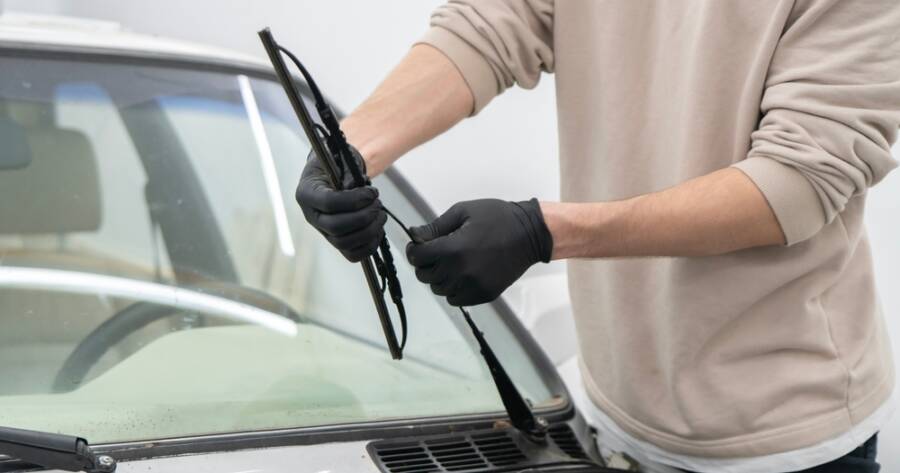
Windshield wipers rarely get attention until the moment visibility drops and the glass turns into a blurry mess. Rain, road spray, dust, and even morning dew can become a real safety problem when blades are worn out. Fresh wipers help you spot brake lights sooner, read lane markings, and react calmly when the weather changes fast. A quick replacement is inexpensive compared to the stress of driving with no visibility through a storm or dealing with a scratched windshield.
Streaking or Smearing Across the Glass
Streaks, smears, or a hazy film after each pass are classic signs that wiper rubber is drying out and losing its sharp wiping edge. As the rubber hardens, it can’t flex evenly against the windshield, so it drags water and grime instead of clearing it. Visibility can look “okay” at low speed, then turn dangerous once headlights and streetlights start reflecting off streaks.
Smearing also builds up driver fatigue. Constantly squinting through cloudy patches makes it harder to judge distance, especially at night or in heavy rain. If washer fluid doesn’t improve the wipe and the windshield is clean, worn rubber is usually the culprit—and replacement becomes the safest move.
Skipping, Chattering, or Uneven “Dead Spots”
Wipers should glide smoothly. If blades chatter, skip, or leave untouched patches, the rubber may be warped, rounded from wear, or curved from underuse. Uneven contact often shows up as “dead spots” where water remains, even though the rest of the windshield clears. That can be especially distracting when turning, merging, or watching for pedestrians at crosswalks.
Sometimes the issue is the frame, not just the rubber. Ice, heavy snow, or accidental bending during cleaning can distort the wiper arm or blade frame so it no longer presses evenly. If the blade looks fine but still skips or misses sections after cleaning the windshield, it’s a strong signal that the blade assembly has aged out.
Visible Cracks, Splits, or Missing Rubber
A quick visual check can reveal a lot. If the rubber squeegee shows cracks, splits, or pieces missing, it can’t channel water away effectively. Sun exposure breaks down rubber over time, and the damage can appear suddenly after a hot stretch or a cold snap. Once the rubber starts separating from the blade frame, the wiper can drag unevenly and smear more than it clears.
Damaged rubber can also become a windshield hazard. When the squeegee edge is gone, the blade’s harder components may contact the glass, increasing the chance of scratches. Small scratches might seem cosmetic at first, but they can scatter glare at night and become costly to repair. Replacing blades early helps protect both visibility and the windshield surface.
How Often Wipers Typically Need Replacing
A solid rule of thumb is to replace windshield wipers every 6 to 12 months, depending on climate and driving conditions. High heat can warp and harden rubber, while extreme cold can make it stiff and brittle. Areas with frequent rain or winter slush also wear blades faster simply because they’re used more often.
Even if the car isn’t driven daily, the wipers still age. Rubber can degrade when sitting in sunlight, and blades can develop a set or curve from resting in one position. Checking wipers every six months keeps the replacement cycle from becoming a surprise. If performance drops during the first storm of the season, that’s usually a sign the interval has already been stretched too far.
Seasonal Habits That Extend Wiper Life
Winter is rough on wipers. Running blades over ice or heavy, crusty snow can bend frames and tear rubber edges. Clearing the windshield fully before turning the wipers on helps avoid damage and keeps the blades sitting properly against the glass. In freezing conditions, wipers can also stick to the windshield; pulling them free carefully reduces the chance of ripping the rubber.
Heat brings its own problems. Prolonged sun exposure speeds rubber breakdown, leading to hardening and splitting. Parking in shade when possible and keeping the windshield clean helps because gritty dust and road film act like sandpaper with every wipe. Small habits won’t make blades last forever, but they can delay early failure and improve wipe quality in between replacements.
Cleaning and Inspection That Prevents Surprise Failures
Dirty wipers can’t clean a dirty windshield. Road grime, salt, and debris collect along the blade edge and reduce performance, sometimes causing streaks that mimic worn rubber. A simple wipe-down can help: lift the wiper arms and clean the rubber with a soft cloth and a non-abrasive glass cleaner or windshield washer solvent. If you see dark residue coming off the blade, it is overdue for a cleaning.
Inspection matters too. Look for cracks, hard spots, tearing, or a rough edge on the squeegee. Check that the frame isn’t bent and the blade sits evenly across the windshield. If cleaning improves performance only briefly, or the blade still chatters and skips, replacement is usually the more reliable fix than trying to nurse a worn blade through another season.
Clear Vision, Calmer Driving
Good wipers are a simple safety upgrade that pays off the moment the weather turns. Smooth, quiet blades help you read the road, spot hazards earlier, and avoid the stress of peering through glare and streaks. Replacing wipers on a routine schedule also reduces the odds of getting caught off guard by sudden rain or slushy spray from passing trucks.
When wipers start smearing, skipping, or showing visible damage, the fix is straightforward. Fresh blades restore clarity fast and can even help protect the windshield from scratches caused by worn rubber or bent frames. Keeping visibility sharp is one of the easiest ways to make everyday driving feel safer and more in control.