
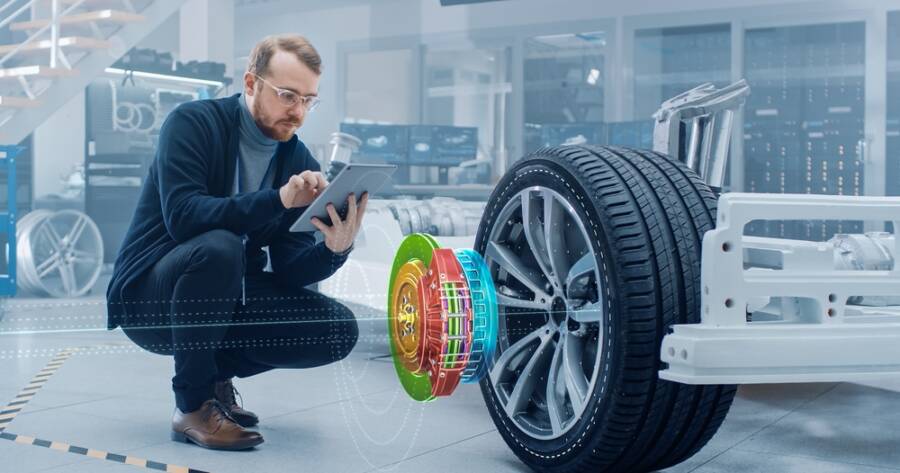
Electric and hybrid vehicles rely on advanced technology to improve efficiency and reduce energy waste. One feature that plays a major role in that effort is regenerative braking. While traditional braking systems convert motion into heat that disappears into the air, regenerative braking captures some of that lost energy and puts it back to work. It’s a clever system that allows modern vehicles to recover power during deceleration, helping extend driving range and improve overall efficiency.
The Basic Idea Behind Regenerative Braking
Regenerative braking is designed to capture energy that would normally be lost when a vehicle slows down. In conventional vehicles, pressing the brake pedal causes friction between brake pads and rotors, which slows the wheels while converting motion into heat.
Electric and hybrid vehicles take advantage of the vehicle’s electric motor to recover some of that energy. Instead of allowing all the kinetic energy to disappear as heat, the motor temporarily switches roles and acts like a generator. As the vehicle slows, that generator converts motion into electricity, which can then be stored in the battery for later use.
The Role of the Electric Motor
The electric motor inside an electric or hybrid vehicle serves two important purposes. During acceleration, the motor draws power from the battery to spin the wheels and move the vehicle forward.
When the driver lifts off the accelerator or begins braking, the process reverses. The spinning wheels drive the motor instead of the other way around. This reverse operation allows the motor to generate electricity rather than consume it. The captured energy is sent back to the vehicle’s battery pack, helping recharge it while the car slows down.
What Happens When You Slow Down
Regenerative braking begins working whenever a vehicle starts to decelerate. This often happens when the driver lifts their foot off the accelerator pedal, presses the brake pedal lightly, or travels downhill.
As the vehicle slows, the motor captures some of the energy from the rotating wheels. That recovered energy is converted into electricity and stored in the battery. Because some of the slowing force comes from this process, the vehicle can reduce speed while simultaneously recovering energy that would normally be wasted during braking.
How Regenerative Braking Works With Traditional Brakes
Regenerative braking does not completely replace the traditional braking system found in vehicles. Instead, both systems work together to provide smooth and effective stopping power.
During gentle deceleration, regenerative braking handles most of the slowing process. When stronger braking is needed, the vehicle automatically activates friction brakes to assist. This combination allows drivers to maintain strong stopping performance while still recovering energy during normal driving conditions. The transition between both systems usually occurs automatically without requiring any special action from the driver.
Benefits for Efficiency and Vehicle Range
One of the biggest advantages of regenerative braking is improved energy efficiency. By recovering power that would normally be lost, the system helps extend the driving range of electric vehicles.
Another benefit involves reduced wear on traditional brake components. Because regenerative braking assists with slowing the vehicle, brake pads and rotors may experience less frequent use. Over time, this can reduce maintenance costs and extend the lifespan of certain braking components while still maintaining safe stopping capability.
Driver Experience and One-Pedal Driving
Some electric vehicles include adjustable regenerative braking settings that allow drivers to control how strongly the system slows the vehicle. Higher regeneration levels can create noticeable deceleration when the driver lifts off the accelerator.
Certain models even feature a “one-pedal driving” mode. In this setting, lifting the foot off the accelerator can slow the vehicle significantly without pressing the brake pedal. While friction brakes are still used for complete stops or emergencies, this driving style can improve energy recovery and make city driving more convenient.
A Smart Way to Reclaim Lost Energy
Regenerative braking represents an innovative approach to improving vehicle efficiency. Instead of wasting energy every time a vehicle slows down, the system captures and reuses part of that power. This ability to convert motion back into electricity helps modern electric and hybrid vehicles operate more efficiently.
As electric vehicle technology continues to advance, regenerative braking will likely remain an important feature for maximizing range and reducing energy waste. The concept demonstrates how smart engineering can transform a routine action like braking into an opportunity to recover valuable energy.