
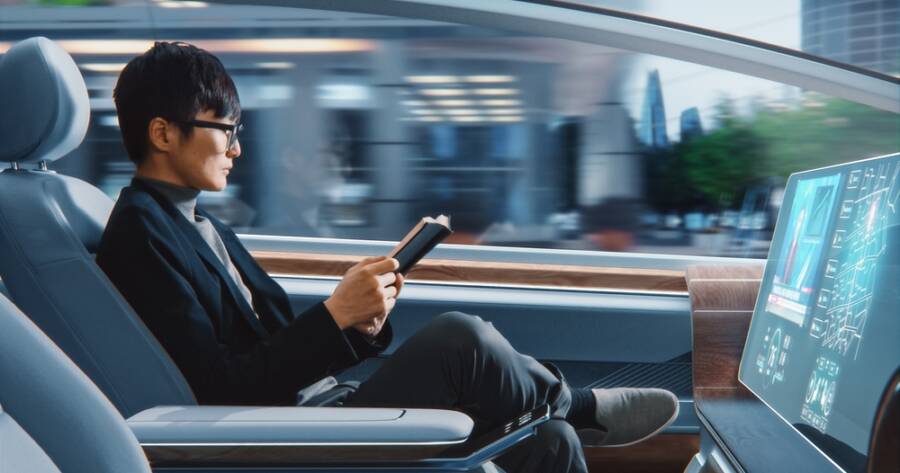
Autonomous vehicles represent one of the most fascinating developments in modern transportation. Combining powerful computers, advanced sensors, and artificial intelligence, self-driving systems allow vehicles to detect surroundings and respond to road conditions without constant human input. Although the technology is still evolving, many cars already include partial automation that assists with steering, braking, and speed control. As research and testing continue, the systems guiding driverless vehicles are becoming increasingly capable of navigating complex road environments.
Sensors That Help Cars See the World
Self-driving vehicles rely on an array of sensors to observe the environment around them. Cameras, radar, and lidar sensors constantly scan the road, identifying objects such as vehicles, pedestrians, lane markings, and traffic signs. Each sensor type provides different kinds of information that help the vehicle understand its surroundings.
Cameras capture detailed images similar to human vision, while radar measures the speed and distance of nearby vehicles. Lidar uses laser pulses to create a highly accurate three-dimensional map of the environment. By combining data from multiple sensors, autonomous systems gain a comprehensive view of the road and surrounding traffic.
Mapping and Understanding the Environment
After sensors collect information, onboard computers analyze the data to build a digital representation of the vehicle’s surroundings. This process allows the system to identify lanes, intersections, obstacles, and other road users in real time. High-definition maps also play a key role in helping autonomous vehicles navigate accurately.
Many self-driving systems rely on detailed pre-mapped routes that include information about road geometry, traffic signals, and landmarks. By comparing sensor data with stored map information, the vehicle can determine its exact position on the road. This layered understanding helps the system make more precise navigation decisions during complex driving situations.
Artificial Intelligence and Decision Making
Artificial intelligence acts as the brain behind self-driving technology. Sophisticated algorithms analyze sensor data and determine how the vehicle should respond to changing conditions on the road. Machine learning models allow the system to recognize objects and predict how other road users might behave.
For example, AI software can estimate whether a pedestrian is about to cross the street or whether another driver may change lanes. Based on this analysis, the system calculates safe driving actions. This continuous decision-making process happens many times per second, allowing the vehicle to react quickly to new information.
Controlling Steering, Braking, and Acceleration
Once the system determines the appropriate action, commands are sent to the vehicle’s control systems. Actuators translate digital instructions into physical movements that steer the wheels, apply the brakes, or adjust acceleration.
This process works similarly to how a human driver operates a vehicle, except the decisions come from software rather than manual input. Smooth coordination between sensors, computing systems, and mechanical components allows the vehicle to follow a planned path while adapting to real-time traffic conditions.
Levels of Driving Automation
Not all self-driving vehicles operate at the same level of autonomy. Engineers classify automation into several levels, ranging from basic driver assistance to full autonomy. Lower levels include systems such as adaptive cruise control and lane-keeping assistance, which still require constant driver supervision.
Higher levels of automation allow the vehicle to manage more aspects of driving independently. Some advanced systems can control steering, braking, and navigation under specific conditions, such as highway travel. Fully autonomous vehicles capable of operating in any environment remain under development, though testing continues in selected cities.
Communication With Vehicles and Infrastructure
Future autonomous systems may rely on communication technology to enhance safety and efficiency. Vehicles could exchange information with nearby cars, traffic signals, and road infrastructure to coordinate movement and reduce congestion.
For example, connected vehicles might receive warnings about hazards ahead or learn when traffic lights are about to change. This type of vehicle-to-vehicle and vehicle-to-infrastructure communication could help autonomous systems anticipate road conditions even before sensors detect them, further improving decision-making and safety.
A Glimpse Into the Future of Transportation
Self-driving technology continues to evolve through research, testing, and real-world trials. Engineers are constantly refining sensors, improving artificial intelligence, and expanding the capabilities of autonomous systems. While many vehicles already offer advanced driver-assistance features, fully autonomous transportation remains a developing field.
As technology matures, self-driving vehicles may reshape mobility by improving road safety, reducing driver workload, and expanding transportation access. Careful regulation, responsible design, and continued innovation will play important roles in determining how this technology fits into everyday travel in the years ahead.