

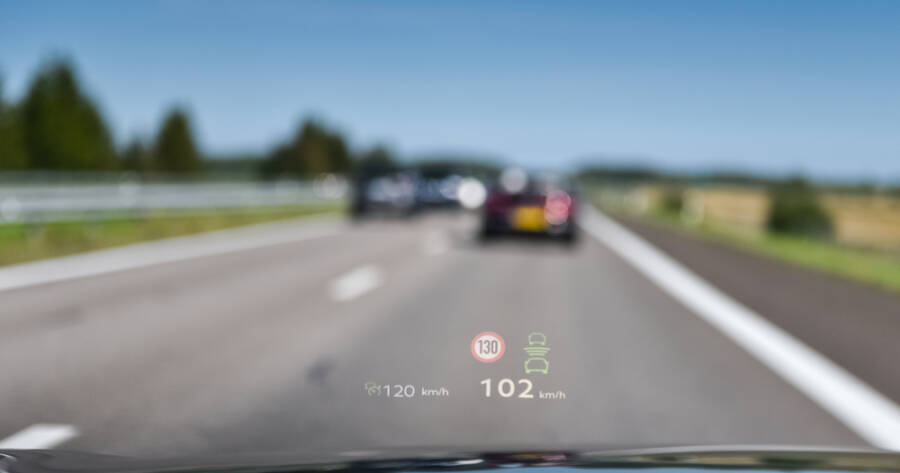
Modern vehicles surround drivers with screens, alerts, and useful information that can easily pull attention away from traffic. Looking down at a speedometer or navigation screen for only a few seconds may not seem dangerous, yet even brief distractions can increase your risk of an accident. Heads-up displays (HUDs) were created to solve that problem by placing important information directly within the driver’s line of sight. Advanced technology allows drivers to monitor speed, warnings, and navigation while keeping a greater focus on surrounding traffic.
What a Heads-Up Display Actually Does
A heads-up display is a transparent digital projection system that places driving information directly onto the windshield or a small display panel near the driver’s field of vision. Instead of glancing down at dashboard gauges, drivers can view important details while still watching the road ahead. Most HUD systems display speed, navigation directions, fuel data, and safety warnings.
The idea originally came from military aviation, where pilots needed to monitor flight data without looking away from the sky. Automakers adapted similar technology for road vehicles to improve convenience and safety. Modern systems often work alongside advanced driver assistance features, giving drivers immediate access to critical alerts without requiring constant eye movement between the dashboard and surrounding traffic.
How HUD Technology Projects Information
HUD systems use a combination of light projection, mirrors, and reflective surfaces to display digital images within the driver’s view. A projector inside the dashboard creates the image, which then reflects onto the windshield or a transparent combiner screen. Drivers see the display floating ahead of the vehicle rather than directly on the glass itself.
Advanced optical systems help prevent distortion caused by the windshield’s curved shape. Many displays are designed so that the projected information appears several feet ahead of the vehicle, reducing the need for drivers’ eyes to constantly refocus between near and far distances. Modern HUDs can also automatically adjust brightness depending on sunlight or nighttime conditions, keeping the information visible without creating glare or distraction during changing driving environments.
Why HUDs Help Drivers Stay Focused
One of the biggest safety advantages of a HUD is reduced driver distraction. Looking away from the road for even a couple of seconds can create dangerous situations, especially during highway driving or heavy traffic. HUDs reduce the need to glance down at gauges because key information stays visible directly ahead.
Frequent eye movement between the dashboard and roadway also forces the eyes to repeatedly change focus distance. HUD technology minimizes that strain by placing information closer to the driver’s normal viewing angle. Drivers can monitor speed or navigation directions while maintaining awareness of nearby vehicles, pedestrians, and road hazards. That smoother visual transition helps improve reaction time and allows drivers to process important information faster during stressful or rapidly changing traffic situations.
Safety Features Often Integrated With HUD Systems
Many modern HUDs work together with advanced driver assistance systems, often called ADAS. Instead of only displaying speed or navigation, newer systems can warn drivers about potential hazards using visual alerts directly on the windshield. Collision warnings, lane departure notifications, blind spot alerts, and adaptive cruise control updates are commonly integrated into modern HUD displays.
For example, if another vehicle enters a blind spot or traffic suddenly slows ahead, the HUD may flash a warning directly in the driver’s view. Some systems also display navigation arrows on the roadway projection area, helping drivers avoid sudden lane changes or missed turns. By combining multiple safety systems into one visible interface, HUD technology allows drivers to react faster while keeping attention focused where it matters most.
Challenges and Limitations of HUD Technology
Although HUD systems improve convenience and safety, they still have limitations drivers should understand. Bright sunlight, poor calibration, or windshield damage can reduce visibility and make projected images harder to read. Improper windshield replacement may also affect alignment, causing distorted or blurry displays.
Some drivers may initially find HUD projections distracting until they become familiar with the system. Overloading the display with too much information can also reduce effectiveness. Automakers continue refining HUD interfaces to balance usefulness with simplicity. Cost remains another challenge because advanced HUD systems often appear in higher trim levels or luxury vehicles. Still, as automotive technology improves and production costs decrease, HUD systems are gradually becoming more common across a wider range of vehicles and price categories.
Keeping Driver Attention Where It Belongs
Heads-up displays represent an important step toward safer and smarter driving technology. By placing critical information directly within the driver’s field of vision, HUD systems reduce distractions and help drivers maintain stronger awareness of surrounding traffic conditions. Faster access to warnings, navigation, and vehicle data supports quicker reactions during situations where every second matters.
As vehicles continue evolving with more advanced safety technology, HUD systems will likely play an even larger role in everyday driving. Future versions may include augmented reality navigation, hazard highlighting, and expanded communication with other driver assistance systems. Even now, HUD technology already offers meaningful benefits by helping drivers spend less time looking away from the road and more time focused on driving safely.